
People In This Story

Departments In This Story
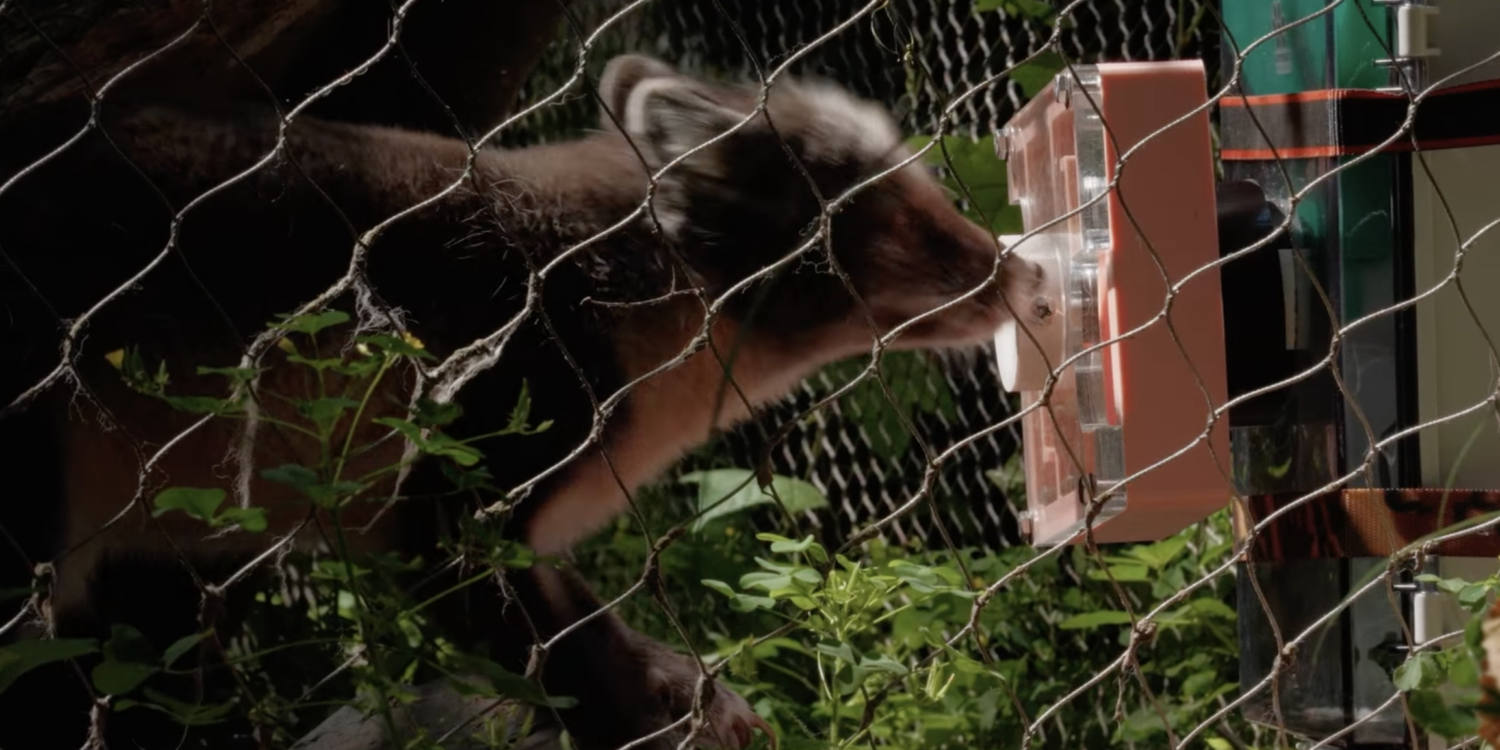
Congratulations to Assistant Professor Rebecca Kleinberger, whose research on how technology can benefit captive animals was profiled recently in The Atlantic: “Zoos are Doubling Down on Very Unnatural Habitats: Could high-tech toys help animals act more wild?”
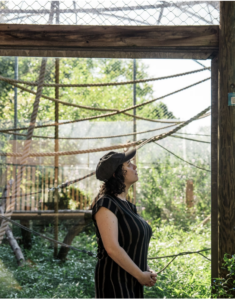
Rébecca Kleinberger, PhD, is a creative technologist and researcher and is jointly appointed in the Department of Music and the Khoury College of Computer Sciences. Her work leverages the hidden potential of the voice to create new experiences that span from assistive technology to vocal experiences design, including inner-voice and interspecies interactions. Her research connects various fields, including human-computer interaction, computer science, music technology, digital signal processing, wearable computing, AI, neurology, psychology, and animal-computer interaction. She aims to raise awareness of the richness of the voice beyond words and the potential of using the voice to access the mind.
She has collaborated with various research and corporate institutions from the San Diego Zoo, to Brigham and Women’s Hospital, Microsoft Research, Google Magenta, Google Arts and Culture, HARMAN, and Bose. Rébecca has published in leading academic venues, including CHI, SIGGRAPH, UIST, NIME, and TEI. She is part of the OtherAbility artist collective working on assistive technology for museums. Her installation works have appeared at the Museum of Fine Art in Boston, Le Laboratoire Paris, and Harvard Divinity School. Her research has also been deployed as part of large-scale musical productions and novel esthetic experiences at Carnegie Hall, the Philadelphia Symphony, the Maison Symphonique de Montreal, the Lucerne Festival in Switzerland, and the Winspear Opera House in Dallas. Her work has also been featured in media channels such as TED.com, The New York Times, The Boston Globe, Engadget, Financial Times Magazine, and 60 Minutes.
Related News
For most, El Niño conjures fear. For some, it inspires art.
October 14, 2026
Jesse Hinson to appear in Huntington Theatre production
October 8, 2026
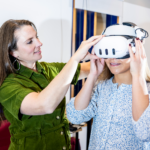
CAMD team gets $900k NSF grant to transform healthcare training
October 8, 2026