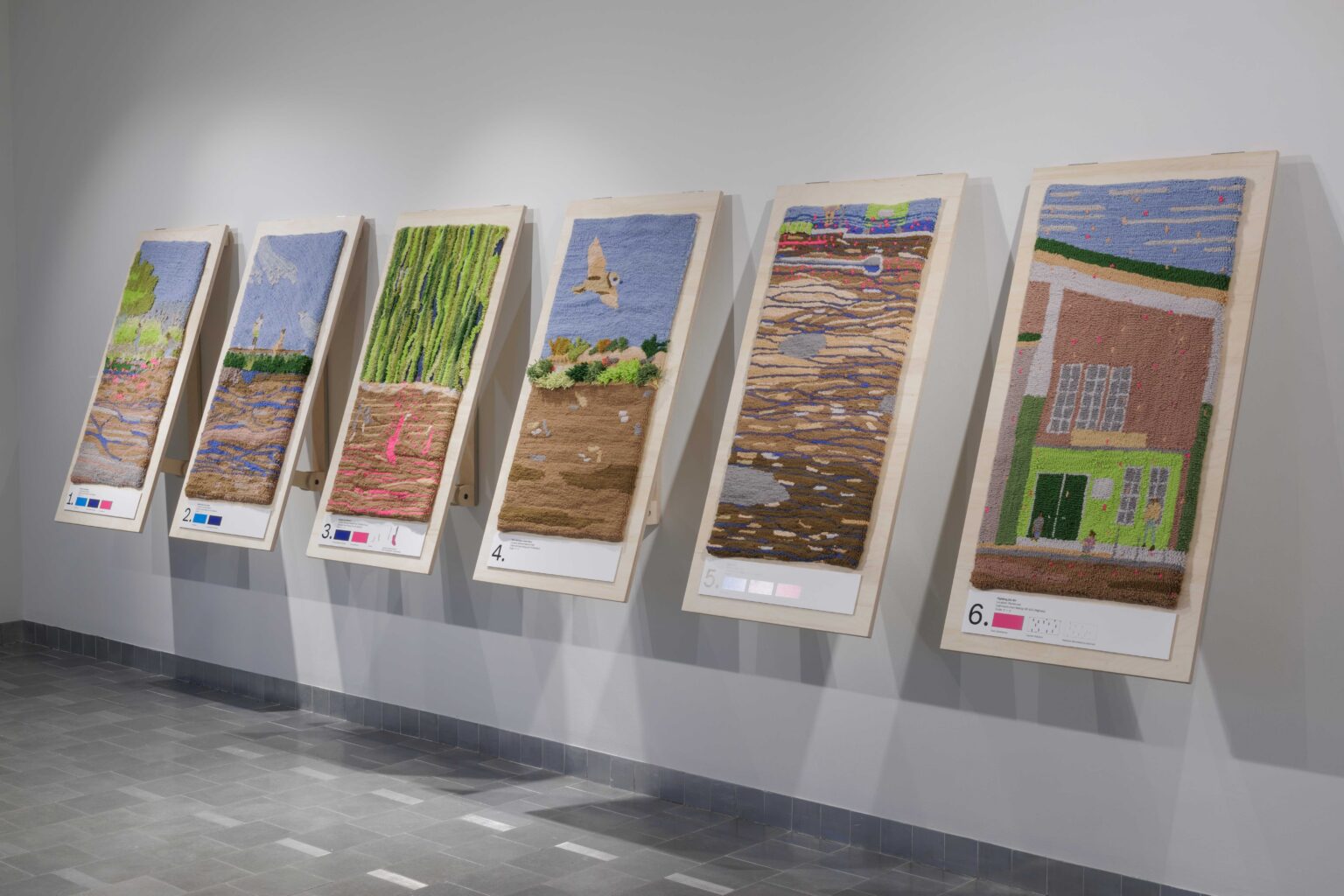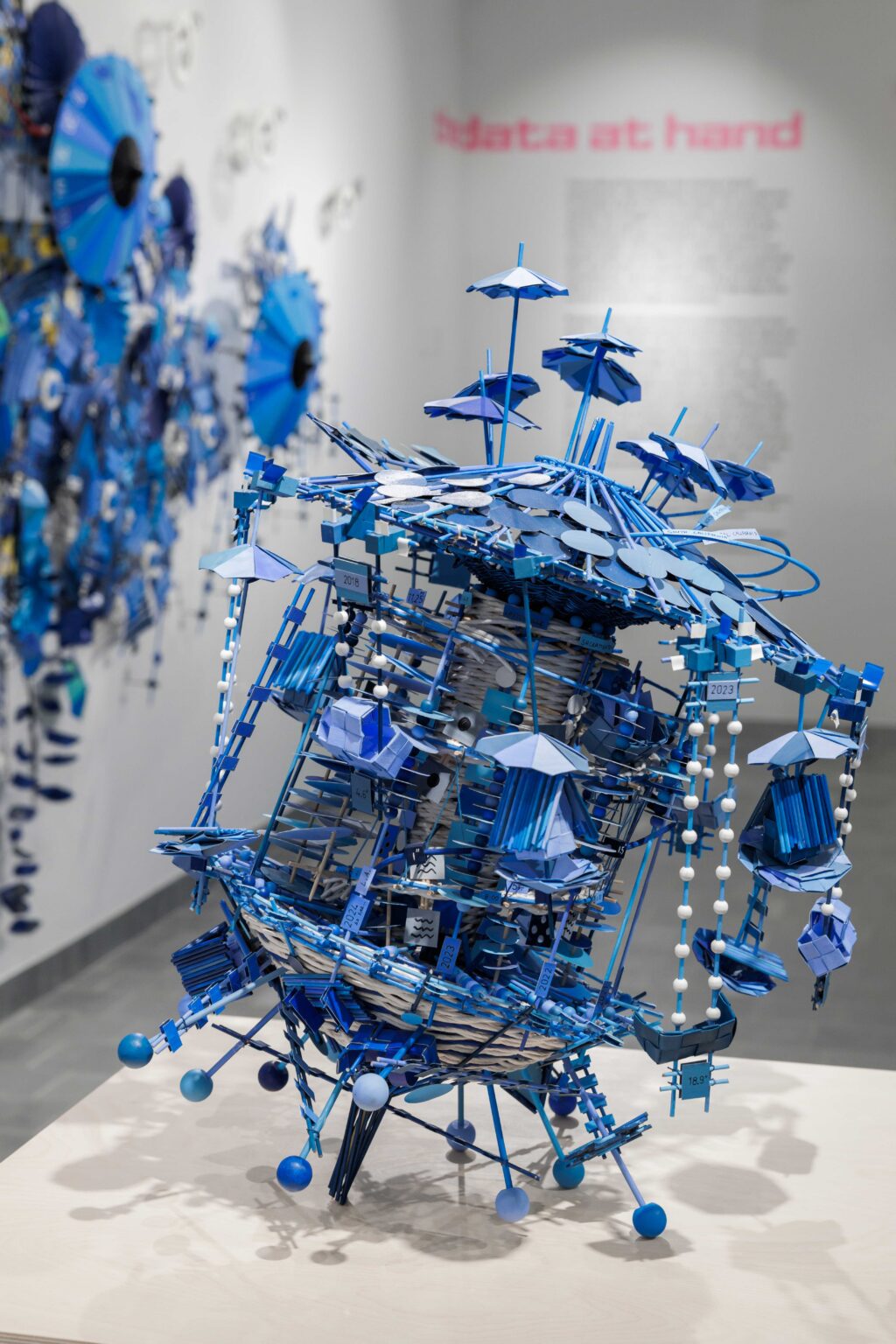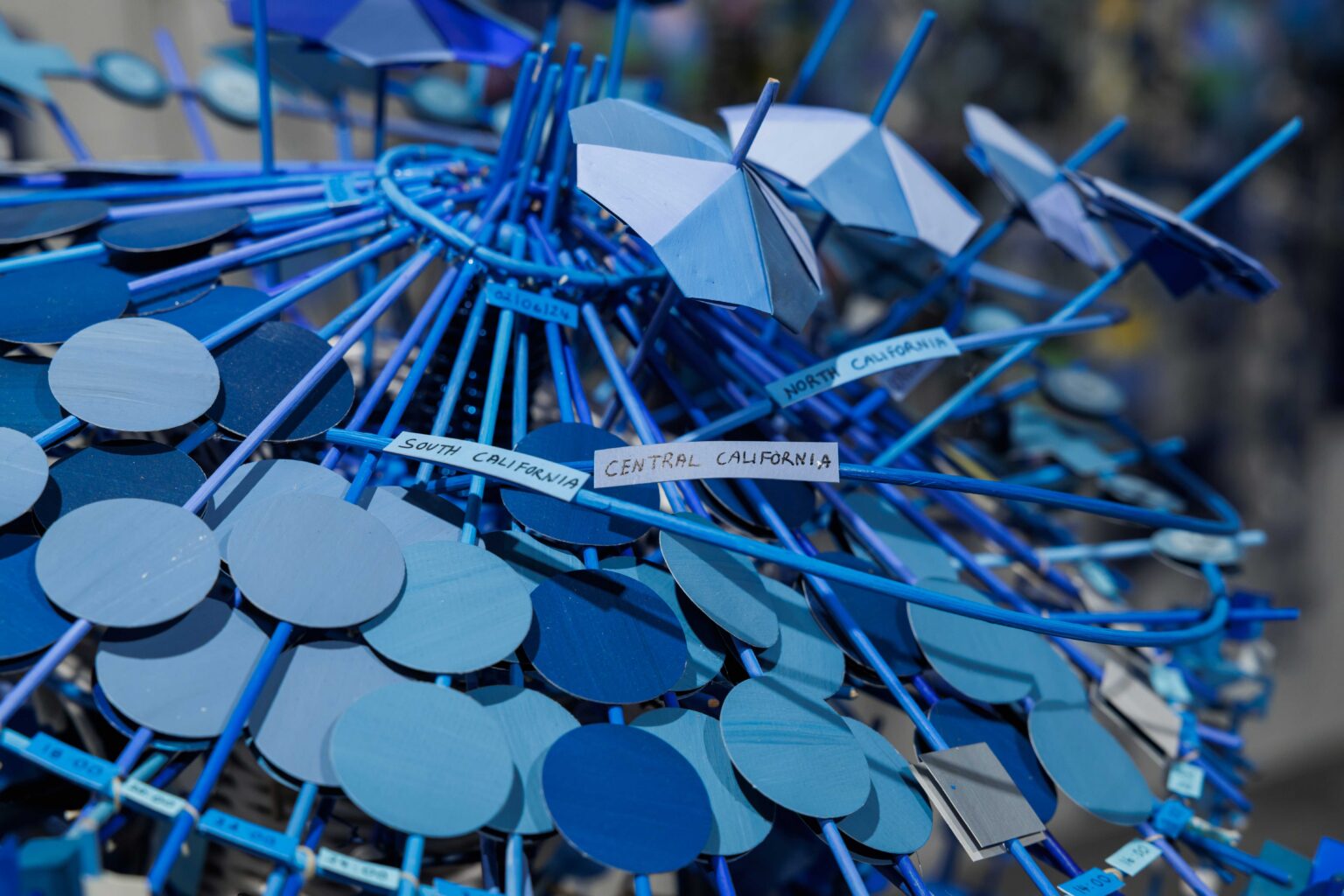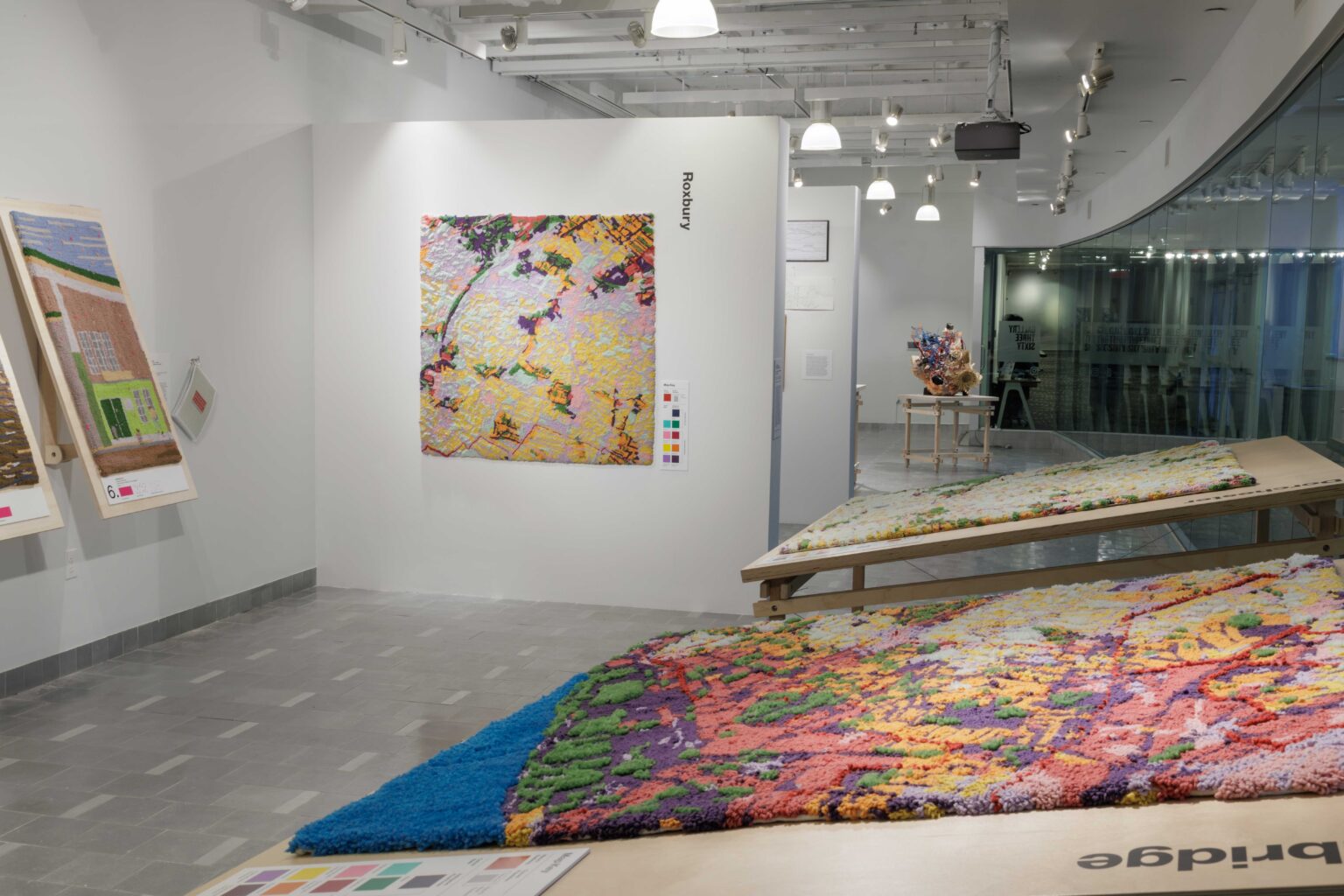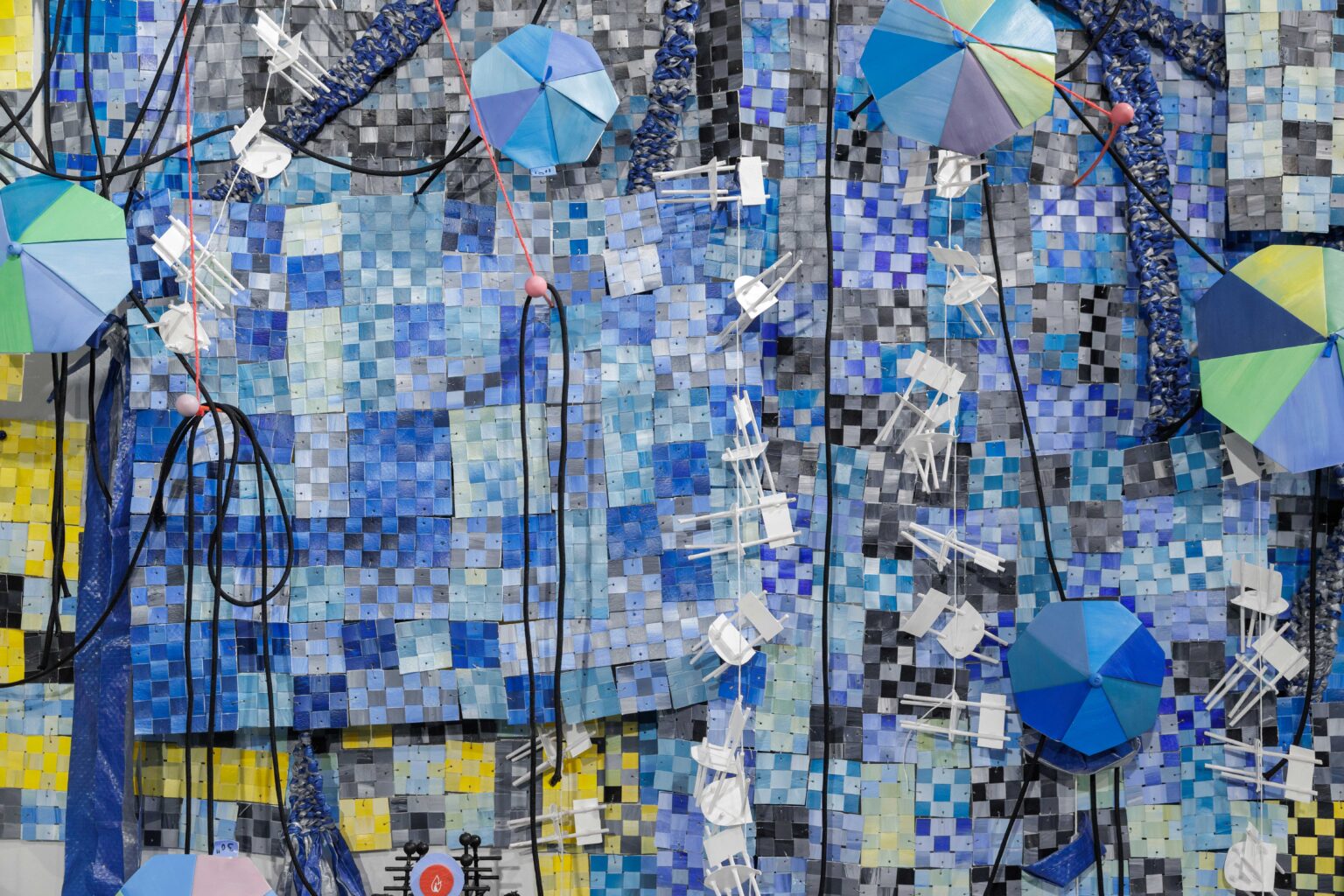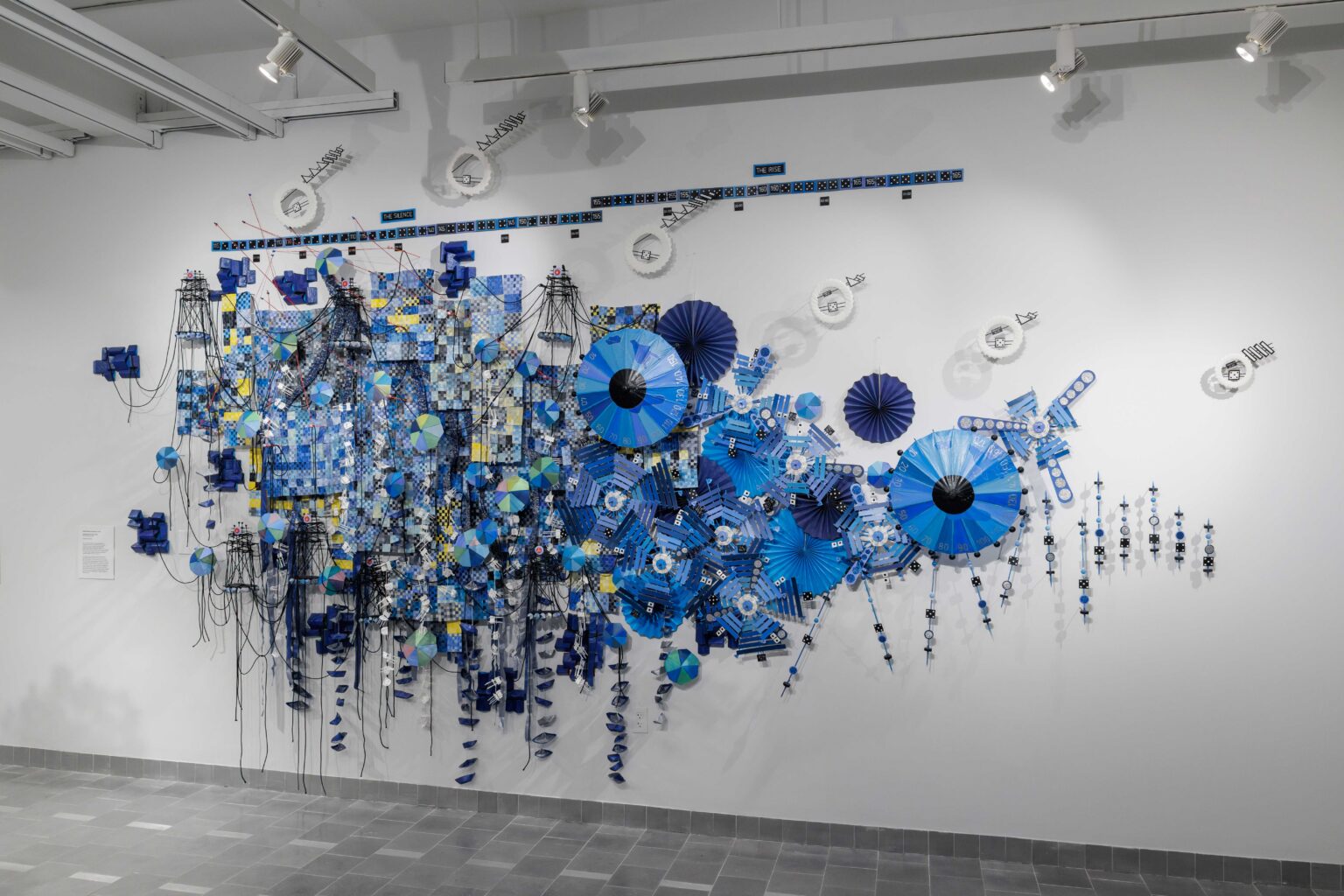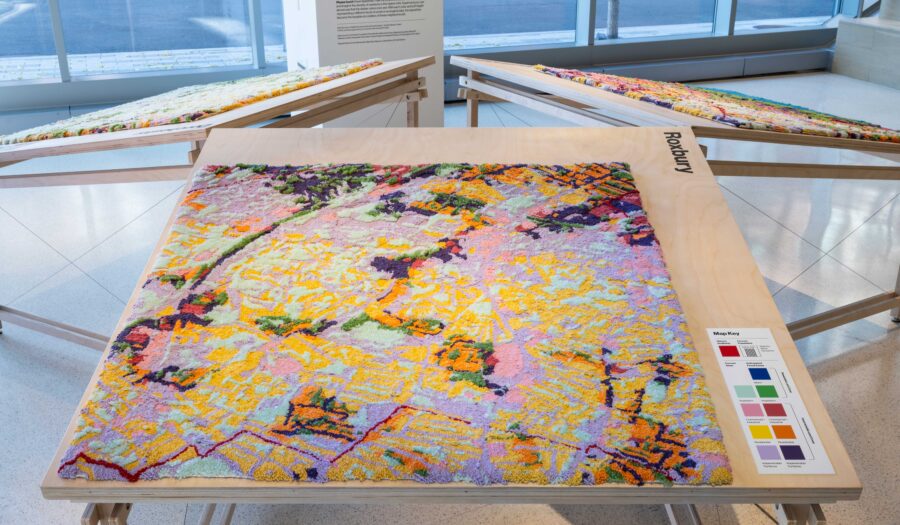
From political forecasting to the charting of global temperatures, data visualization has become a trusted tool to translate and give form to information. As scientists and activists have struggled to accurately communicate the enormity and urgency of humanity’s impact on the Earth, they’ve looked to data visualizations as a key means of communication. Yet these tools—which saturate so much popular media—can be difficult to engage with on a personal level, and at worst can engender feelings of numbness and powerlessness. Data physicalization, or the act of giving a data set physical form, can counteract the data fatigue that we face in a world of digital visualizations.
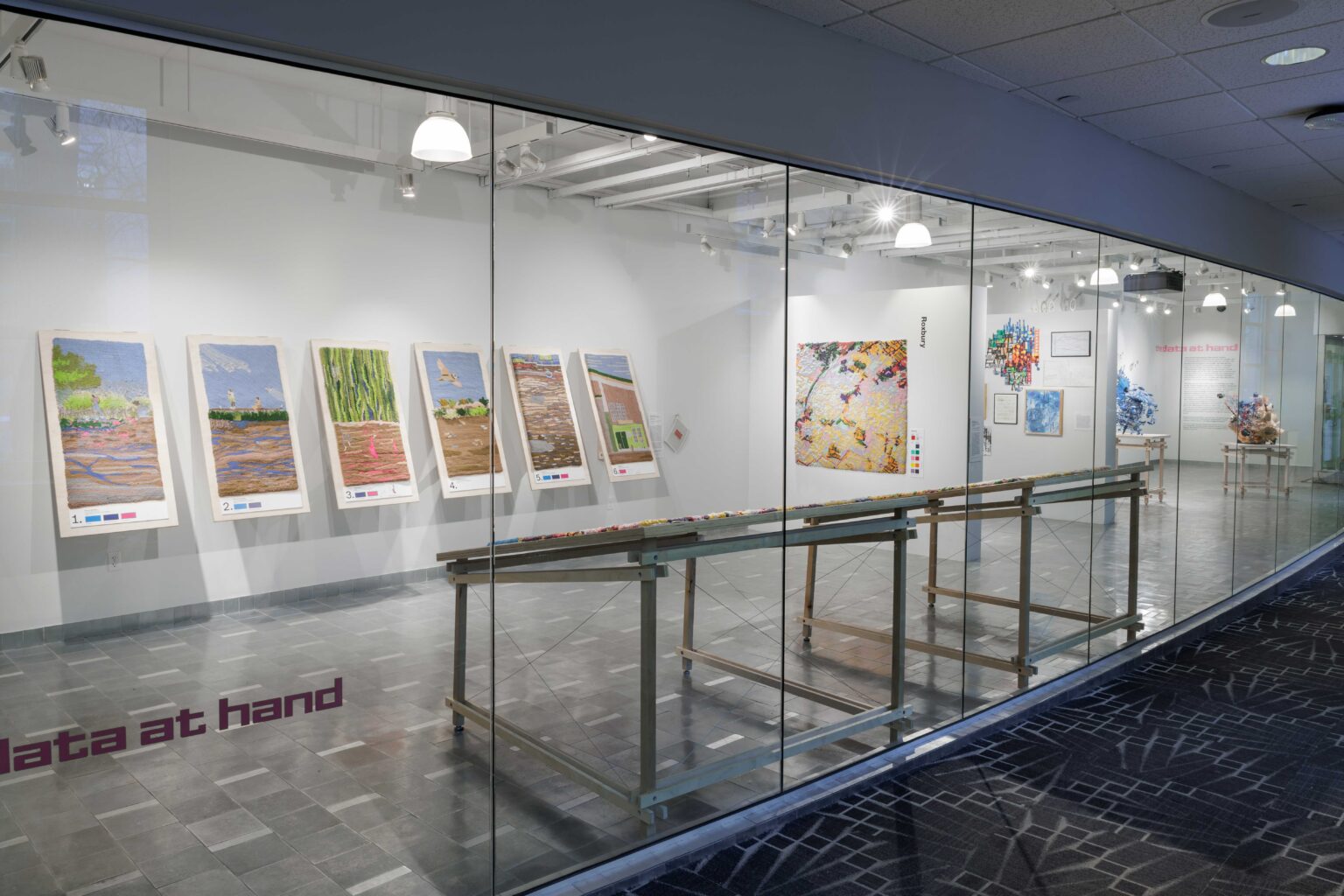
Bringing together new commissions and existing work from artists Nathalie Miebach and just practice (Amanda Ugorji and Sophie Weston Chien), The Data at Hand: Data Physicalizations of Earth and Space considers these questions and concerns around forming knowledge and the environment. The exhibition highlights work in traditional craft materials like fiber, wood, and glass by artists who aim to make the complexity of our planet concrete and accessible. Drawing upon datasets from sources ranging from the shifting terrain of riverbeds to the practices of redlining, these artists make clear that data isn’t confined to spreadsheets. It bleeds into the world, affecting the actions of individuals and institutions. The Data at Hand offers us powerful examples of physical and experiential means to escape feeling lost in data, modeling the power of grounding it in experience and the material world.
Organized by Kayleigh Perkov, guest curator, with Juliana Rowen Barton, Director of the Center for the Arts and University Art Collections and Stephanie Hanor, Director of the Mills College Art Museum
The Data at Hand: Data Physicalizations of Earth and Space is presented as a collaboration between Gallery 360 and the Mills College Art Museum. The exhibition will be on view, in an expanded form, in Oakland in Fall 2026.
By

Kayleigh Perkov, Juliana Barton and Stephanie Hanor
Date and Time
January 21 – April 4, 2026
Monday-Saturday, 12-5pm
Location
Gallery 360, 1st Floor of Curry Student Center near Ell Hall; 360 Huntington Ave, Boston MA 02115
Admission
Free