
Language has a peculiar power to make machines feel social—a phenomenon Weizenbaum observed long before today’s LLMs, later confirmed by the Computers Are Social Actors (CASA) paradigm showing we reflexively treat interactive systems as if they have personalities and social obligations. As conversational agents have become more fluent, that reflex has strengthened, making “personality” less decorative and more consequential.
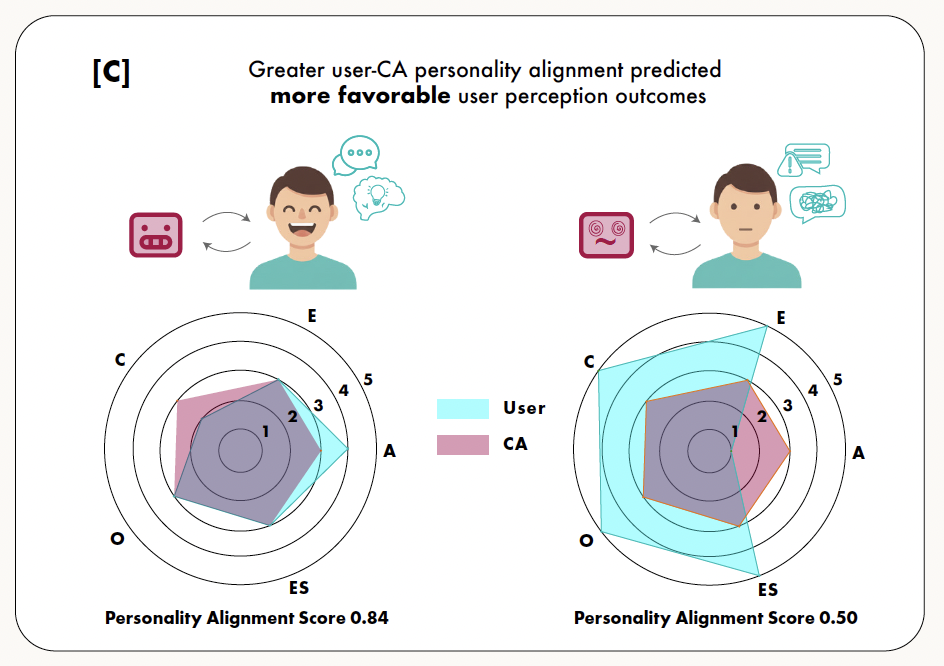
Vibe Check takes that seriously by asking: when an assistant expresses more or less personality, what changes for the person on the other side? In our CHI 2026 work, we built three versions of the same assistant differing only in conversational style intensity and studied how people responded during practical tasks. Participants didn’t treat these differences as superficial—they shaped whether the agent felt reliable, pleasant to work with, and worth returning to.
Ongoing work now develops persona presets: clear, bounded interaction styles that help designers choose how a system should “show up” in different situations, moving beyond ad-hoc “brand voice” decisions toward guidance that supports warmth without overstepping and helpfulness without overreliance.
By

Smit Desai and Hasibur Rahman