
Departments In This Story
Sylke Rene Meyer is a writer, director, media artist, performer, educator, and co-founder of the artist group Studio206 that operates from Berlin, Los Angeles and Providence.
Last fall, she installed a public art piece called Send/Receive in downtown Providence. The project commemorates three sites in the city that are specific to the city’s immigrant histories, including the Grace Church Cemetery, the historic synagogue, and the site of the former Fefa’s market. Each structure features a short-range radio transmitter that invites passersby to broadcast their stories, music, and more.
In a recent conversation with Vivica Dsouza, CTM’s Communications Assistant, Meyer discussed why she’s drawn to interactivity, how spatial storytelling changes what “authorship” means, and what she’s thinking about ahead of an April talk tied to her book on Soviet narratology and story design.
This interview has been edited for brevity and clarity.
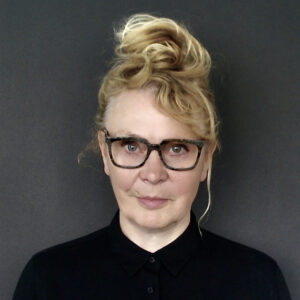
CTM: Can you share your journey as an artist and educator? How did your early experiences in theater, film and performance lead to your current work?
Sylke Meyer: My original relationship with the arts was in theater in Europe. Over time, I moved from theater to film and worked as a writer-director, narrative movies, essentially, but I always had a performance practice on the side. So, I’ve long held both forms: linear authorship through screenwriting and filmmaking and also collaborative, improvised, experiential forms through performance. I started combining video and performance and media art very early on, so there’s actually a consistency in the work, even as specific practices shifted.
My interest in academia and teaching began around 2000, tied to identity and to how narrative can form and justify structural inequalities. Later, I narrowed from a broader politics of narrative to interactivity — two-way communication between humans, and between humans and machines. It still leads back to identity: Who are we, and why is that question so important for every other species on this planet?
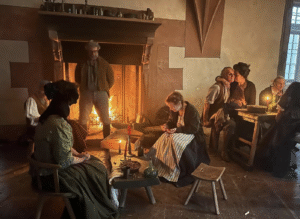
CTM: Your creative practice spans media art, public art, film and performance. How do those different modes of storytelling inform each other?
Meyer: In linear, authored forms like film and theater, identity is often created through identification, between the protagonist and the audience member watching. In many dramatic structures, the storyteller aims to align the audience with what the protagonist wants or needs, building toward catharsis.
For me, the bigger question is what those structures do socially, how narrative rituals help communities live inside systems built on structural inequality. In interactive narrative, the producer, the actor and the audience member are often the same person. It becomes closer to role-playing: you explore and co-create with others. Those identity formations are temporary, and you can shift roles. That opens possibilities for imagining societies grounded more in structural equality.
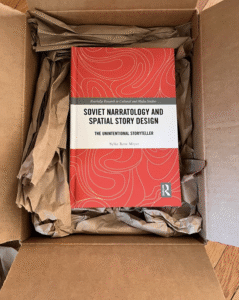
CTM: Your book, Soviet Narratology and Spatial Story Design: The Unintentional Storyteller, looks at narrative design through structure and space. What drew you to this topic, and what do you hope readers take away?
Meyer: Soviet narratology, and the Russian formalist tradition, emphasizes structure over content. It matters less what a narrative is “about” than the form, structure and location in which it takes place. That shift also downplays the author as the primary source of meaning. Instead, you look at the text, and later, as these ideas develop, you move toward space as a carrier of narrative meaning.
That’s part of what leads to spatial storytelling, where beginning-middle-end becomes less central. You enter a narrative space, and the space itself carries dramatic information. A door, a chair, a window with bars — those details establish stakes and invite action. Spatial story design is about shaping the probabilities of how a user behaves inside that space. You don’t control everything, but you can guide experience through design.
CTM: You’re planning a book talk in April connected to this work. What are you hoping to focus on in that discussion?
Meyer: I haven’t fully decided yet. Given the CTM community, I may focus on games — different forms of games, and how they carry different implications. But I’m not quite sure yet.
CTM: In our conversation, you spoke about critical inquiry as technology evolves. How do you see critical thinking shaping creative practice as AI advances?
Meyer: AI raises questions about consciousness and life: What counts as “living,” and what happens if people begin to treat AI as living, whether or not it’s conscious? It also challenges human identity in a direct way. If humans have long understood themselves as the fastest, the smartest, the superior species, that self-concept shifts when we build companions that may be smarter, faster and less fragile.
That creates new pressures — fragility, anger, resentment — and it forces a practical question: What are we needed for as a species? If work changes radically, identity changes, too, because many adults are identified through what they do for work.
Creative practice matters here because narrative media doesn’t only justify the world as it is. It also produces fantasies and utopian images of how the world could be. If authorship becomes more questionable, I think interactive media, co-creation and multiple authorship become more important.
CTM: Looking ahead, what are you most excited about pursuing in your research or artistic work?
Meyer: I’m excited about the public artwork I’m doing these days, constructed situations for interactivity. I’m interested in how to engage an audience without forcing it, while holding a contemplative and philosophical component alongside play. I think it’s important to find ways of community building in a period of massive disruption, including disruptions to how identity is constructed.
I’m trying to move away from narratives of transhumanism or supremacy and toward a more equal, communitarian model of identity.
Related News
CAMD Excellence in Teaching Awards
February 13, 2026
At Gallery 360, artists transform data into art
February 12, 2026

How the way you walk impacts your health and your city
February 12, 2026