
Departments In This Story
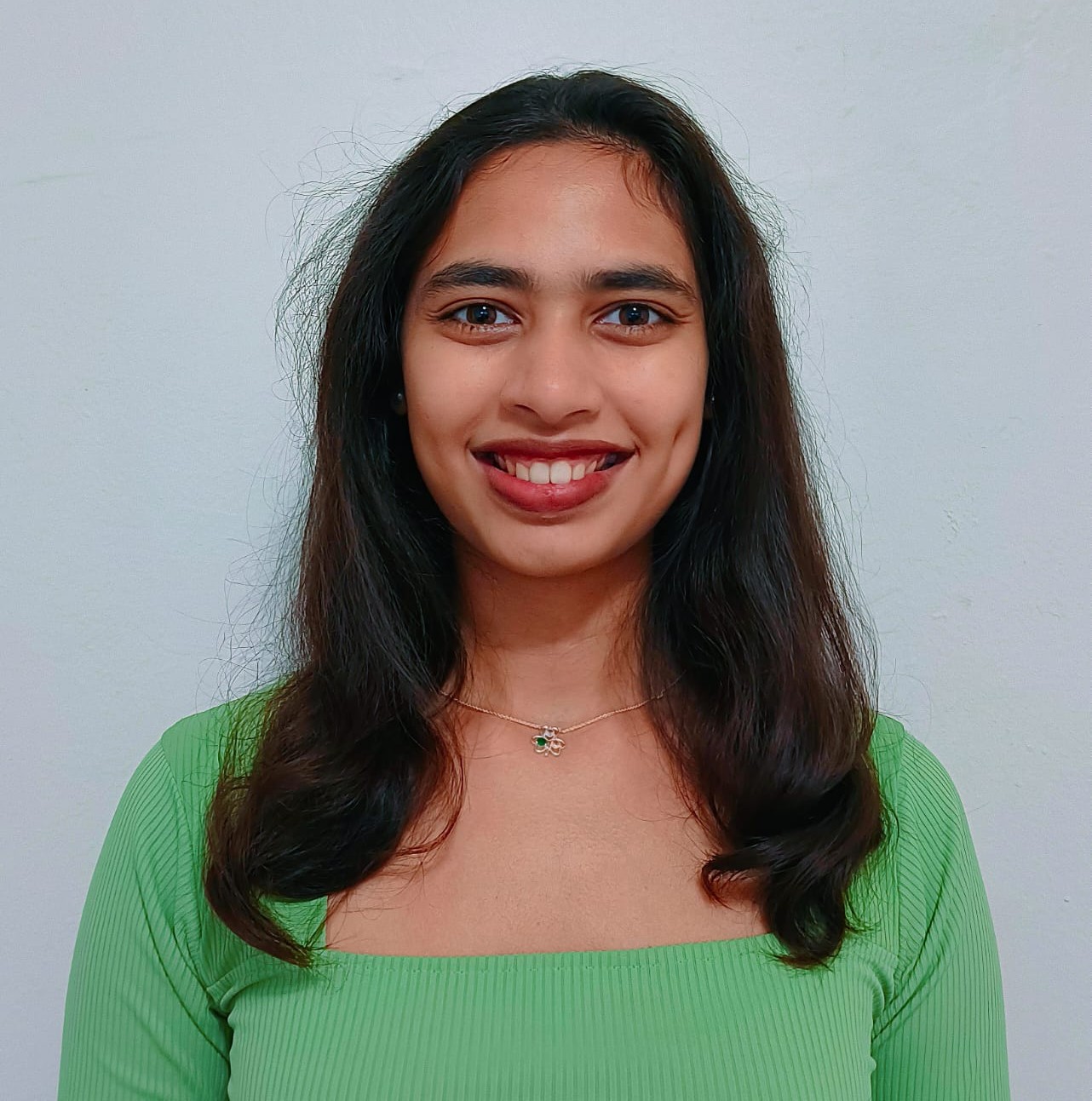
Ragan Glover is a mobile and immersive media scholar whose work examines how material conditions shape access to, communication with and experiences of digital media. She currently serves as the Chair of the Advisory Board for the Center for Transformative Media, where she helps guide the Center’s long-term goals.
Glover is also the Director of the Michigan Research and Discovery Scholars program at the University of Michigan and brings more than a decade of experience in student-centered teaching, interdisciplinary research and administrative leadership. The overarching goal of her work is to encourage more equitable and just relationships to digital technologies that intersect with everyday life.
For this edition of the Scholar Spotlight series, CTM Communications Research Assistant Vivica Dsouza spoke with Glover about her research journey, her role on the CTM Advisory Board and how the Center supports students, faculty and researchers working at the intersection of media, technology and social change.
The following interview has been edited for brevity and clarity.
CTM: To start us off, could you share a little about your background and how you came to study mobile and immersive media?
Ragan Glover: During my PhD program, I was working with Adriana de Souza e Silva. Around the same time, I was taking a mobile communication course and helping plan a conference with her thematized around hybrid space and play. I remember thinking a lot, at this time, about what it means to have everyday life mediated by digital media.
I was asking myself: What does it mean to connect to our surroundings, and to one another, through a device? How does that extra layer of digital information change how we see the world, how we relate to people, and how conversations take shape? Those became fascinating questions for me, and they’re questions I’m still exploring. The questions persist because mobile media, and the digital landscape more broadly, keep changing.
As I followed those questions, something else became very clear: Infrastructure matters. It’s not enough to ask: “how does this shape everyday life and experience?”. We must also ask how the experience gets constructed. And this curiosity is very engrained in my own experience. I grew up in rural North Carolina, where cell service and internet infrastructure is unevenly distributed. There are gaps in connectivity that impact education, access to government, and other critical resources. My experience of being at the fringes of access made me realize how much one’s networked experience depends on where you are, and where you are in relation to infrastructure.
CTM: A lot of your work looks at how material conditions shape people’s access to and experiences with media. What kinds of questions or concerns tend to guide your research?
Glover: I suppose that another central question I ask is: How does the way we talk about new and emerging media compare with the messiness of lived experience. For example, we tend to talk about the internet as a global network that anyone can access if only they’re connected, but the reality is much more complicated.
People have very different experiences of the internet’s contents based on where they live. Today, we regularly see governments and regimes use principles of “digital sovereignty” to control which information their citizens can access or what they can post. This happens through censorship, surveillance or even cutting off internet access during periods of unrest.
There are real risks tied to where you are when you use a networked device, where the data, from that interaction is stored, and how that data is governed. We need to avoid essentializing networked experiences and, instead, consider the lived and contextualized experiences of people.
CTM: You’ve worked closely with students in a range of teaching and administrative roles over the years. How has that experience shaped the way you think about media, learning and research?
Glover: Right now, I direct an undergraduate research program that brings together students from many disciplines: engineering, medicine, kinesiology, media studies—you name it.
What stands out to me is how many of the questions we ask in media studies matter across fields, especially questions about data. How is data represented? Who has access to it? How do we think about data justice—the idea that people should have a say in how data about them is collected and used?
Working closely with student-researchers keeps me grounded in those concerns. As researchers, the questions we ask shape the data that exists in the first place. I want students to be aware of that responsibility, no matter what discipline they’re in.
I also value students because they bring fresh perspectives if you just listen. For example, there’s a common narrative right now that students are constantly misusing tools like ChatGPT. In my experience, it’s more nuanced. Many students are skeptical of AI, concerned about environmental impacts and frustrated when instructors rely heavily on these tools. Being in close conversation with students has taught me to lead with curiosity rather than assumptions.
CTM: You currently serve as chair of the Center for Transformative Media’s Advisory Board. How did you first become involved with CTM, and what drew you to the Center’s work?
Glover: A bit earlier, I mentioned that Adriana [the CTM’s Director] and I began working together in 2017. From our early conversations, we found a shared scholarly interest in how mobile games transform relationships to space and to community.
We knew that there were many important mobile games and urban play projects, but no centralized record of their development. That eventually led to the Retro Mobile Gaming Project, which aims to create a centralized record of those games. That work, along with several other of our related projects, found a home in the Networked Mobilities Lab at NC State.
When Adriana moved to Northeastern, we agreed to continue this work under the support of the CTM. She invited me to stay involved and help sustain and grow those projects through CTM. It was a continuation of our collaboration and a natural fit with the Center’s mission.
CTM: For those who may not be familiar, could you share a bit about the advisory board’s role and how it supports CTM’s broader mission?
Glover: The advisory board has been involved since Adriana took over as the Director of the CTM. We helped refine the mission and values and, since then, we’ve served as a sounding board as the Center continues to grow.
That includes advising on events, thinking through collaborations with external partners and contributing to longer-term planning. Many of us also collaborate directly with members of the Center, since our research aligns closely with the CTM’s goals.
CTM: From your perspective, what are some of the ways students, faculty or staff might engage with or benefit from the work happening at CTM?
Glover: Workshops are often the most immediate way to get involved. CTM brings in scholars doing exciting work, and those events create opportunities for learning and connection.
Beyond that, the Center’s network of scholars is a real resource. The advisory board represents a range of fields, and the members are open to collaboration and mentorship.
The CTM also seems very open to proposals — for events, showcases or demonstrations. For students especially, that creates space to share creative projects and research as well as build professional or academic portfolios. If I were a student at Northeastern, I’d be thinking about how CTM could help bring my work into conversation with a broader audience.
CTM: Are there particular issues or developments you’ve been thinking about more lately?
Glover: I’ve been paying close attention to the expansion of data centers in local communities. In Michigan, where I’m based, there are proposed data centers in places like Saline and Ypsilanti, and many residents are strongly opposed. People are worried about water use, electricity costs and environmental impact.
What interests me is how these infrastructure debates only seem to gain attention when they directly affect daily life. We all rely on digital technologies, but we rarely think about the physical systems behind them until they’re in our backyard. Nevertheless, I’m interested in what meaningful community resistance could look like, and why it so often feels symbolic rather than substantive.
CTM: Looking ahead, what kinds of questions or collaborations are you most excited to continue exploring?
Glover: A perspective that’s shaping my thinking right now is what’s sometimes called a “more-than-human” approach to media. I’ve been exploring this with my colleague Scott Campbell, who is also on the advisory board.
This perspective asks us to rethink the idea that humans, technologies and the natural world are separate. Instead, it encourages us to see how deeply interconnected all of it is. That framing changes how I think about data centers and media use. I’m now not only on focused on how media shape the human social world. I’m concerned about the environmental impact of our media practices.
We must recognize that our futures are tied to the natural world. By doing so, it becomes harder to treat land and other natural resources as something we can endlessly extract from without consequence.
CTM: Is there anything you’d like to add?
Glover: What excites me about CTM is its interventionist capacity. The Center doesn’t just ask how media can be used for social good. It also examines systems of inequity and harm, and it asks how we can intervene in what already exists.
Media and technologies aren’t fixed. They’re open to critique and change. The CTM creates space for that kind of thinking, and that’s what I’m most excited to continue building through my work with the Center.
Related News

CAMD faculty present results of Creative Catalyst Program
August 20, 2026

New Faculty Joining CAMD
August 5, 2026

Ilya Vidrin wins major grant for embodied ethics research
August 5, 2026