
Data are produced through practices of making, partitioning, compartmentalizing, seeing, representing, etc. An experiential (i.e. practice-based) understanding of how data are created, situated, and used reveals that data are not something given from the world or necessarily indexically connected to it, but are constructed artifacts worth critical investigation.
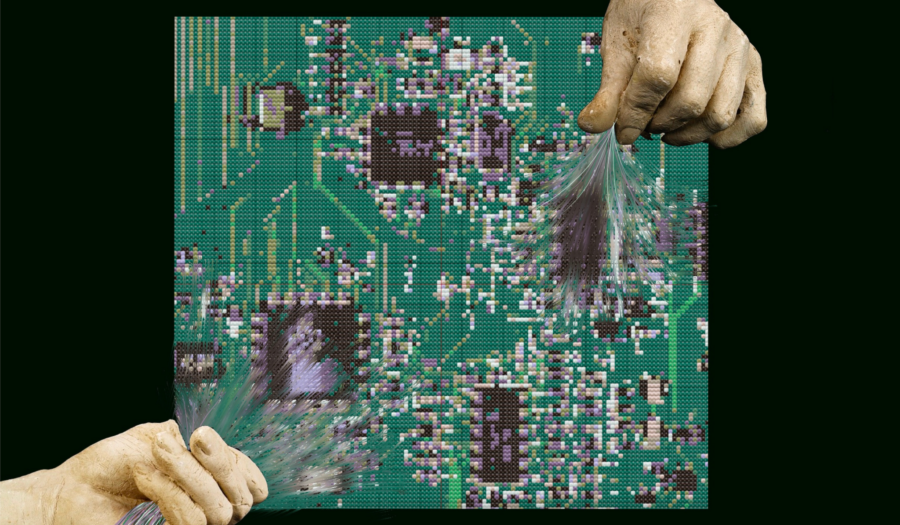
Human experience is the starting point for critical and creative practices of making across the College of Arts, Media and Design: making the built environment, designing expressive artifacts, sharing performances, or storytelling through news and media, for example.
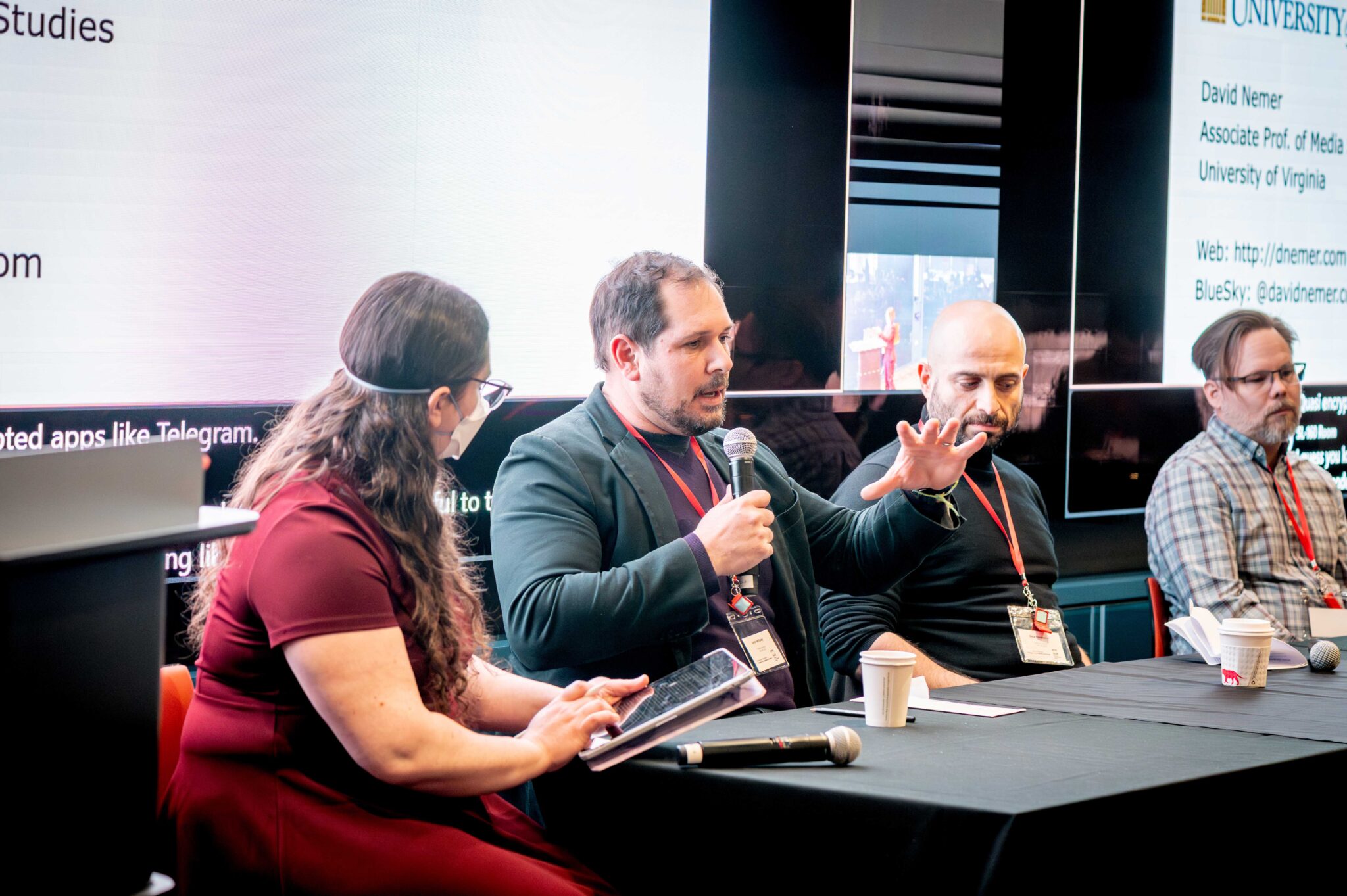
CAMD research and teaching advances understanding of practices being reshaped by AI
A core strength of CAMD disciplines is their emphasis on process and practice. By emphasizing the interactive nature of data and AI – understanding data as constructed artifacts situated in human contexts, and engaging with AI as a technology that is actively shaped through our encounters with it and that shapes how we interact with data – CAMD disciplines can privilege a process- and practice-oriented approach that is frequently unaccounted for in other disciplines.
Critical evaluation of AI tools and systems is essential to bypassing the hype and doomsday predictions surrounding AI. As a college focused on critical and creative practice, we approach these tools with an open mind but a critical eye for the ways that technologies may “flatten” human experience and diversity, compromise matters of authority and intellectual property in cultural industries, and unfairly exploit human labor, materials, and artifacts for economic or political advantage.
AI is both one more tool in the long human history of world-making, and a novel set of capacities to be explored. While AI cannot automate creativity, it can be part of creative workflows and aid brainstorming, prototyping and ideating. CAMD faculty experiment with the benefits and limitations of using computational processes in creative and critically reflexive ways.
Upcoming Events

Wed, Apr 15, 2026
2:00 — 3:00 pm
Center for Transformative Media
Webinar: AI Influencers and the Future of the Creator Economy
Online
AI Projects Showcase

Global Mobile AI in Urban Life
Center for Transformative Media, AI at CAMD
This project examines how Mobile AI—artificial intelligence embedded in mobile devices and urban infrastructures—shapes everyday life, communication, and mobility in low-income urban communities across globally diverse c
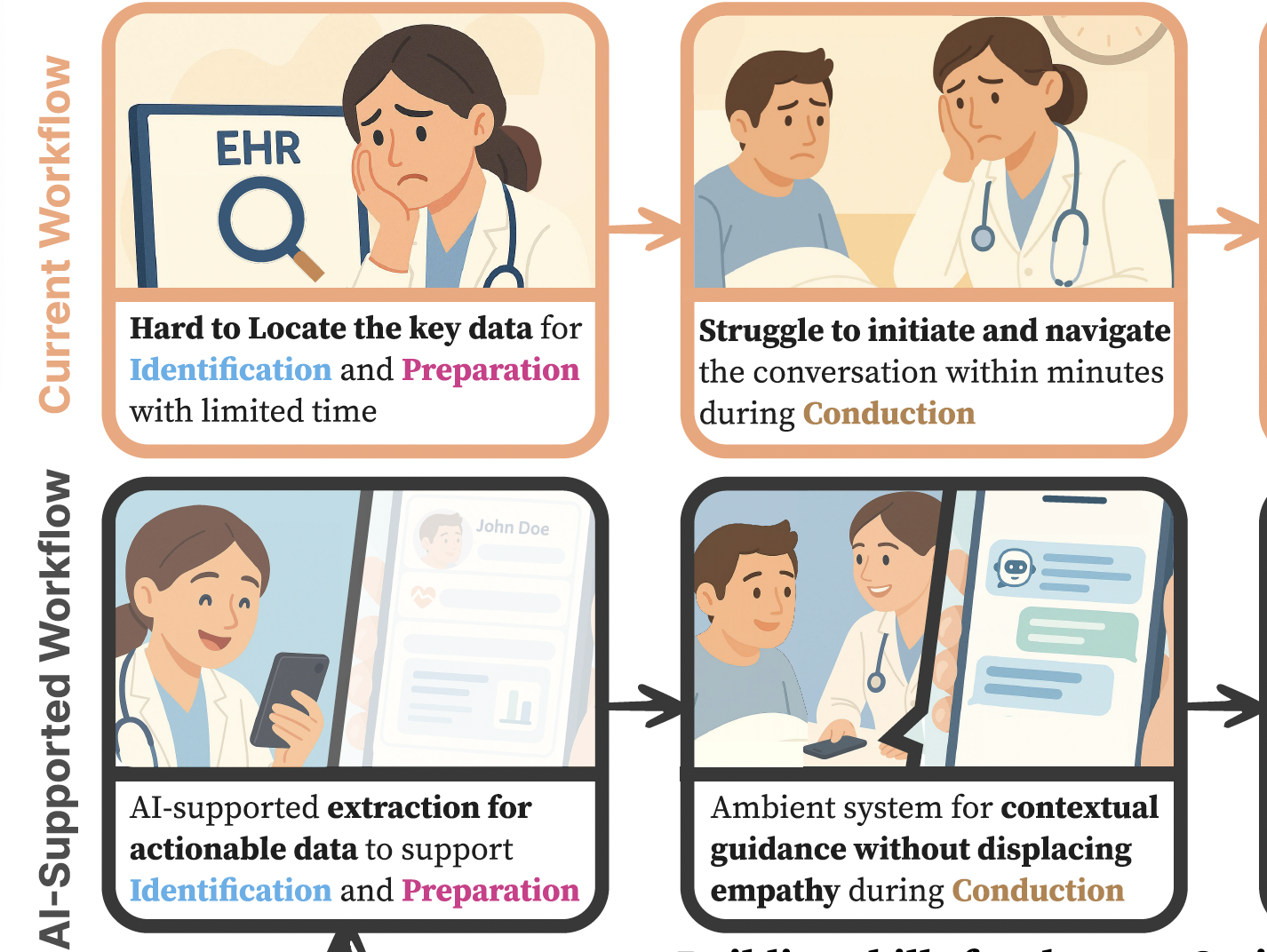
AI workflows for serious illness conversations in ED
AI at CAMD
Serious illness conversations—discussions about values and care preferences—can align medical care with what matters most to patients, yet they rarely happen in Emergency Departments.
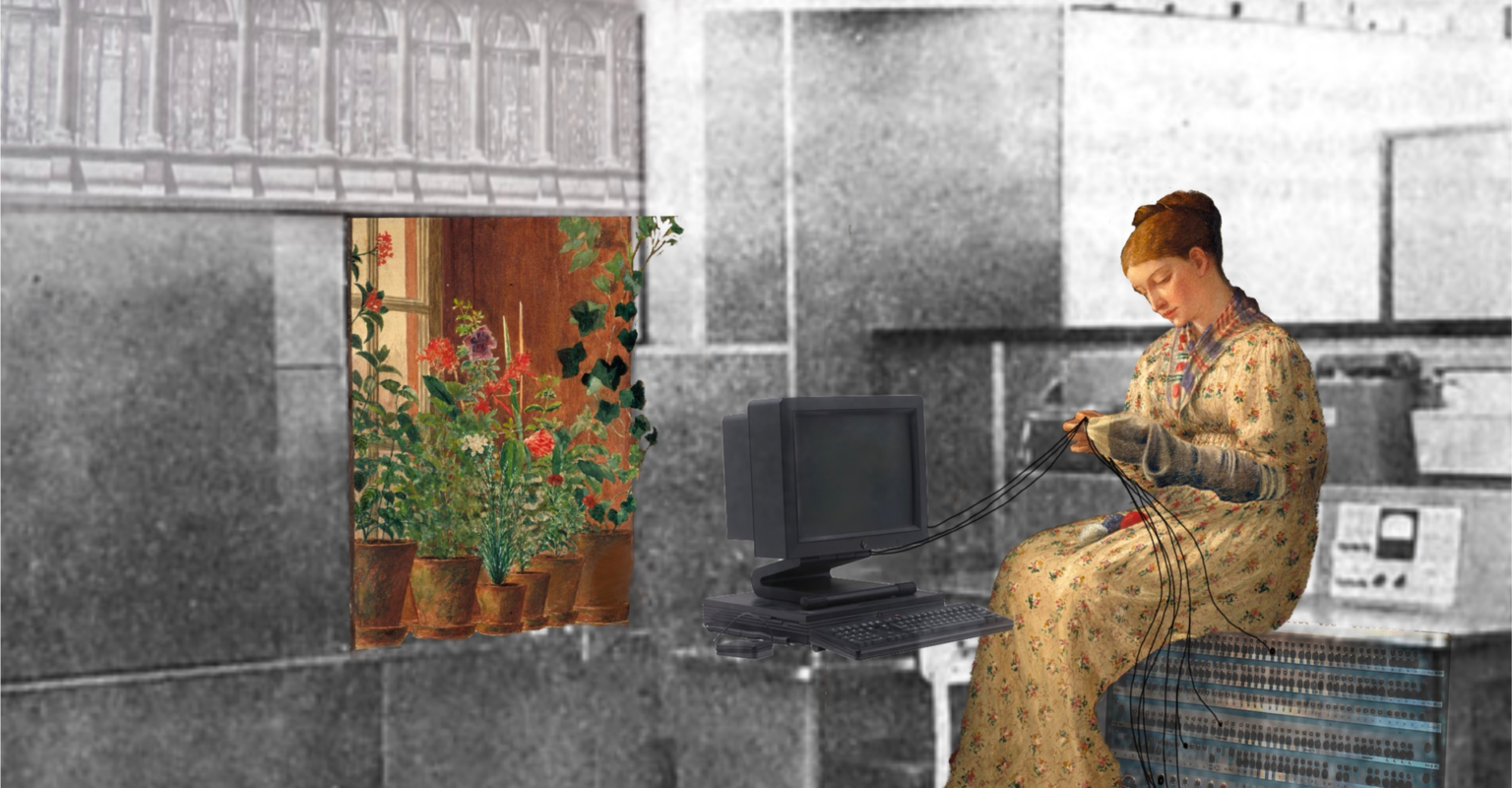
Data Ark: Defining Provenance Frameworks for AI Training Data
AI at CAMD, Art + Design
While models depend on large-scale training datasets, there is currently little to no scholarly framework for documenting where those datasets come from, how they are assembled, and how they circulate/degrade over time.

AI Webinar Series
Center for Transformative Media, AI at CAMD
This webinar series examines artificial intelligence as a cultural medium rather than merely a technical tool, exploring how AI shapes communication, creativity, governance, and everyday life across diverse contexts.
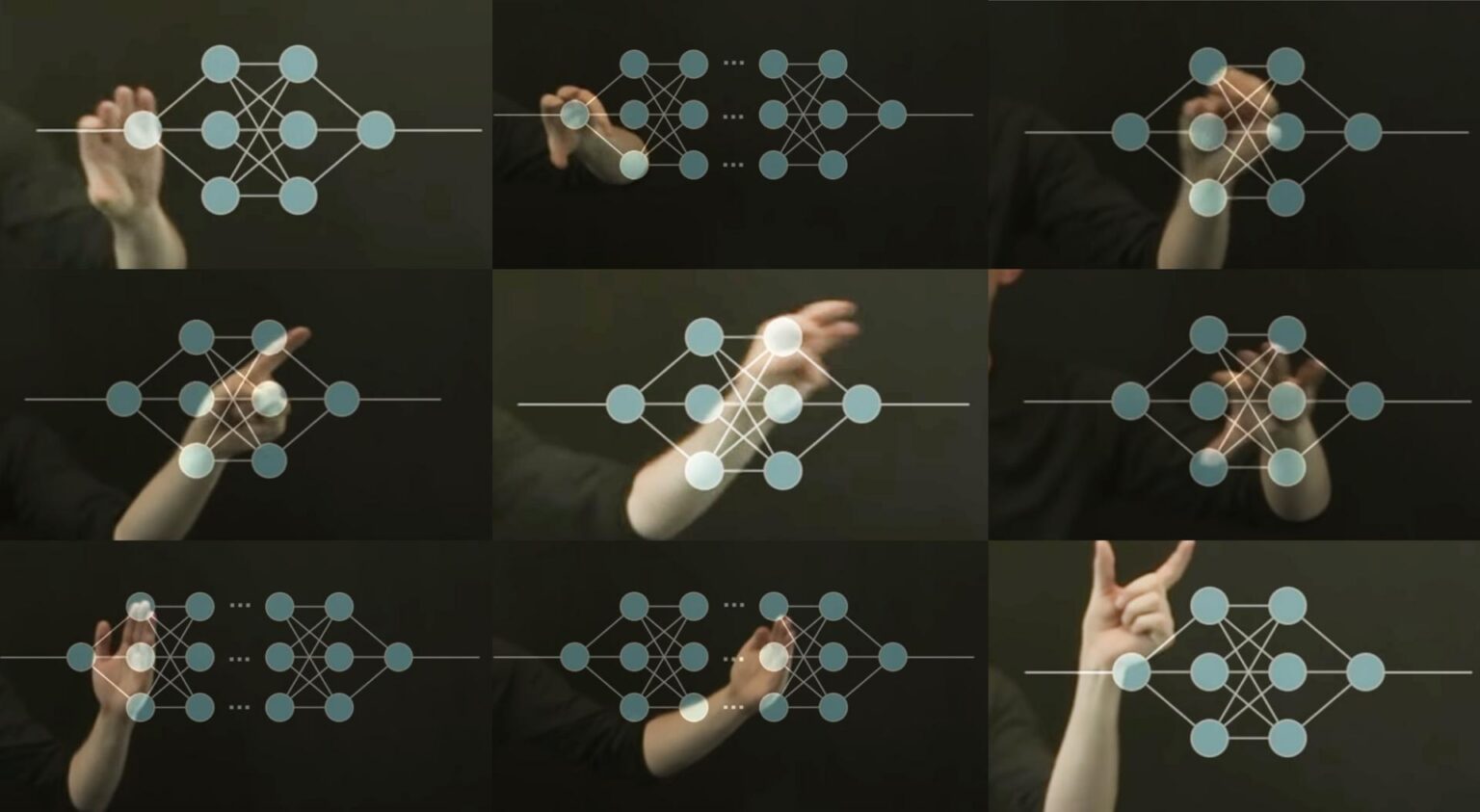
AI for research: a modular dissertation management system
AI at CAMD
Investigating how working with AI can enhance administrative workflows for professional and academic work.
AI Webinar Series
Center for Transformative Media, AI at CAMD
This webinar series examines artificial intelligence as a cultural medium rather than merely a technical tool, exploring how AI shapes communication, creativity, governance, and everyday life across diverse contexts.
AI for research: a modular dissertation management system
AI at CAMD
Investigating how working with AI can enhance administrative workflows for professional and academic work.
Global Mobile AI in Urban Life
Center for Transformative Media, AI at CAMD
This project examines how Mobile AI—artificial intelligence embedded in mobile devices and urban infrastructures—shapes everyday life, communication, and mobility in low-income urban communities across globally diverse c
AI workflows for serious illness conversations in ED
AI at CAMD
Serious illness conversations—discussions about values and care preferences—can align medical care with what matters most to patients, yet they rarely happen in Emergency Departments.
Data Ark: Defining Provenance Frameworks for AI Training Data
AI at CAMD, Art + Design
While models depend on large-scale training datasets, there is currently little to no scholarly framework for documenting where those datasets come from, how they are assembled, and how they circulate/degrade over time.
Carousel with one slide shown at a time. Use the Previous and Next buttons to navigate.
AI for research: a modular dissertation management system
AI at CAMD
Investigating how working with AI can enhance administrative workflows for professional and academic work.
Global Mobile AI in Urban Life
Center for Transformative Media, AI at CAMD
This project examines how Mobile AI—artificial intelligence embedded in mobile devices and urban infrastructures—shapes everyday life, communication, and mobility in low-income urban communities across globally diverse c
AI workflows for serious illness conversations in ED
AI at CAMD
Serious illness conversations—discussions about values and care preferences—can align medical care with what matters most to patients, yet they rarely happen in Emergency Departments.
Data Ark: Defining Provenance Frameworks for AI Training Data
AI at CAMD, Art + Design
While models depend on large-scale training datasets, there is currently little to no scholarly framework for documenting where those datasets come from, how they are assembled, and how they circulate/degrade over time.
AI Webinar Series
Center for Transformative Media, AI at CAMD
This webinar series examines artificial intelligence as a cultural medium rather than merely a technical tool, exploring how AI shapes communication, creativity, governance, and everyday life across diverse contexts.
Publications
View a curated list of essays and perspectives from CAMD faculty exploring the intersection of artificial intelligence with art, design, media, and creative practice.
Learn more about CAMD research and innovation