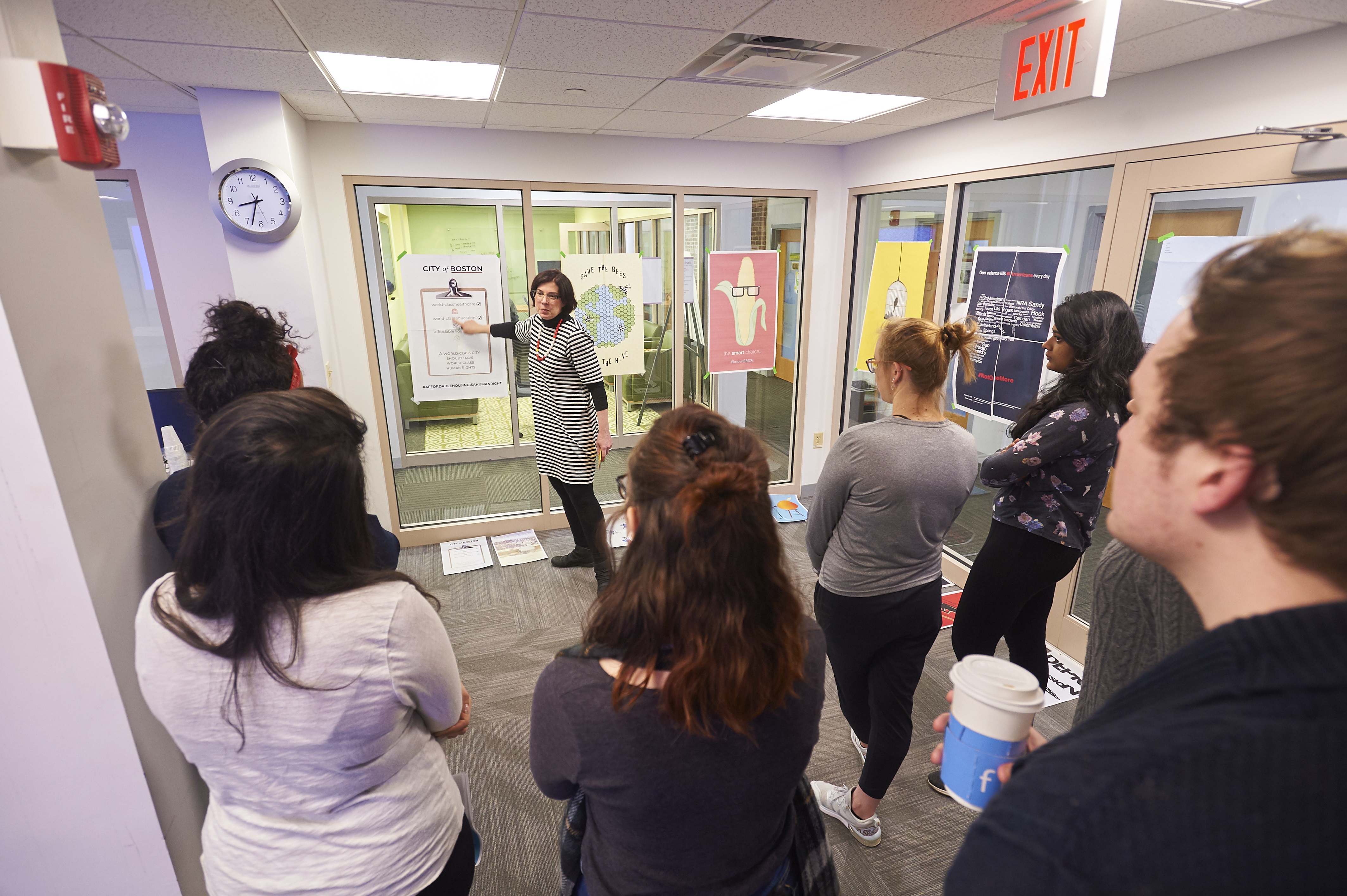
The Master of Science in Media Innovation and Data Communications is a STEM-designated program that bridges digital communications with strategic, innovative storytelling, preparing students for high-demand careers across different media industries. This interdisciplinary degree connects Journalism, Art + Design, and Communication Studies to develop sophisticated visual and data communication skills.
The 36-credit curriculum features core courses in Visualization Technologies, Media Innovation Studio, Digital Journalism Fundamentals and Data Storytelling, complemented by specialized electives that students can choose from. The MS in Media Innovation and Data Communication is also affiliated with multiple campus research entities, including the Co-Laboratory for Data Impact, the Center for Design and the Center for Transformative Media, allowing students to participate in valuable experiential and intellectual endeavors. This program is typically completed in three semesters with scholarship and assistantship opportunities available.
Apply Now
Learning Outcomes
- Articulate knowledge at the cutting edge of new media, data analysis and communication, and visualization.
- Explore, evaluate and create new formats, tools and ventures to investigate research questions through qualitative and quantitative methods in all stages of data collection, transformation, analysis, and communication in the service of multimedia storytelling.
- Use emerging technologies and techniques of information and data design; visual communication and cognitive science; data analysis and visualization; photography, documentary and visual storytelling; virtual reality, augmented reality and mixed reality; social media; computer science; and more.
- Add valuable insight to the conversation around new media and data storytelling through external engagement with the community driving media innovation.
- Evaluate and critique media products, platforms, and projects based on principles of democracy and equity, and on ethics, history, and cultures of media innovation.
- Examine the role of media technologies in practices of knowledge production and society.
- Drawing on scholarly literature, articulate arguments for relevant theoretical and critical positions that relate to issues of inclusivity, diversity, and social goods.
- Describe, analyze, and critique the role of Journalism in a democracy (1st Amendment).
- Gather and use data for reporting & analysis.
- Collaborate with other news professionals in writing & production of news.
- Report & produce a story across a range of media.
- Identify patterns in media innovation & the evolving business dynamics of Journalism.
- Write focused, organized, literate, and accurate narratives using AP Style; when appropriate.
- Critically analyze visual information.
- Understand and apply ethical standards of Journalism.
Degree
Master of Science
Credits
36
Duration
1.5 Years
Location
Boston
Format
In-person
Type
STEM-designated