Design thinking and practice impact virtually every professional and societal context. Northeastern’s Master of Science in Design focuses on design as a method for solving complex problems, building your leadership skills, and preparing you for a broad range of careers.
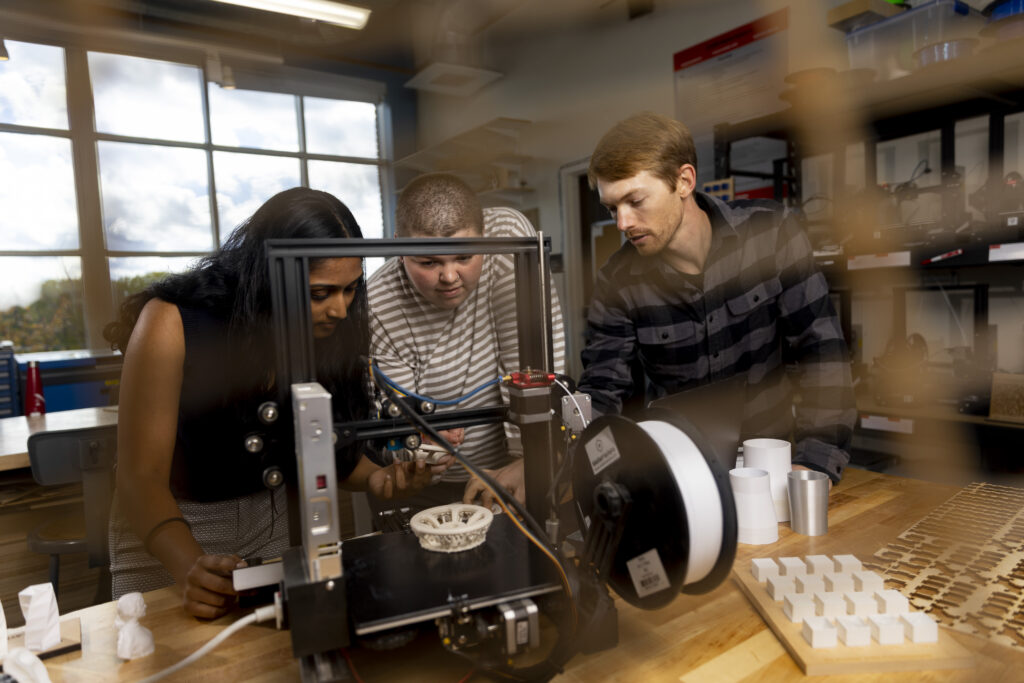
You’ll engage in project-based coursework spanning design theory, research and methods, visual cognition, statistics for design, systems thinking, advanced prototyping, and emerging technologies, including AI, AR/VR, and data-driven methods.
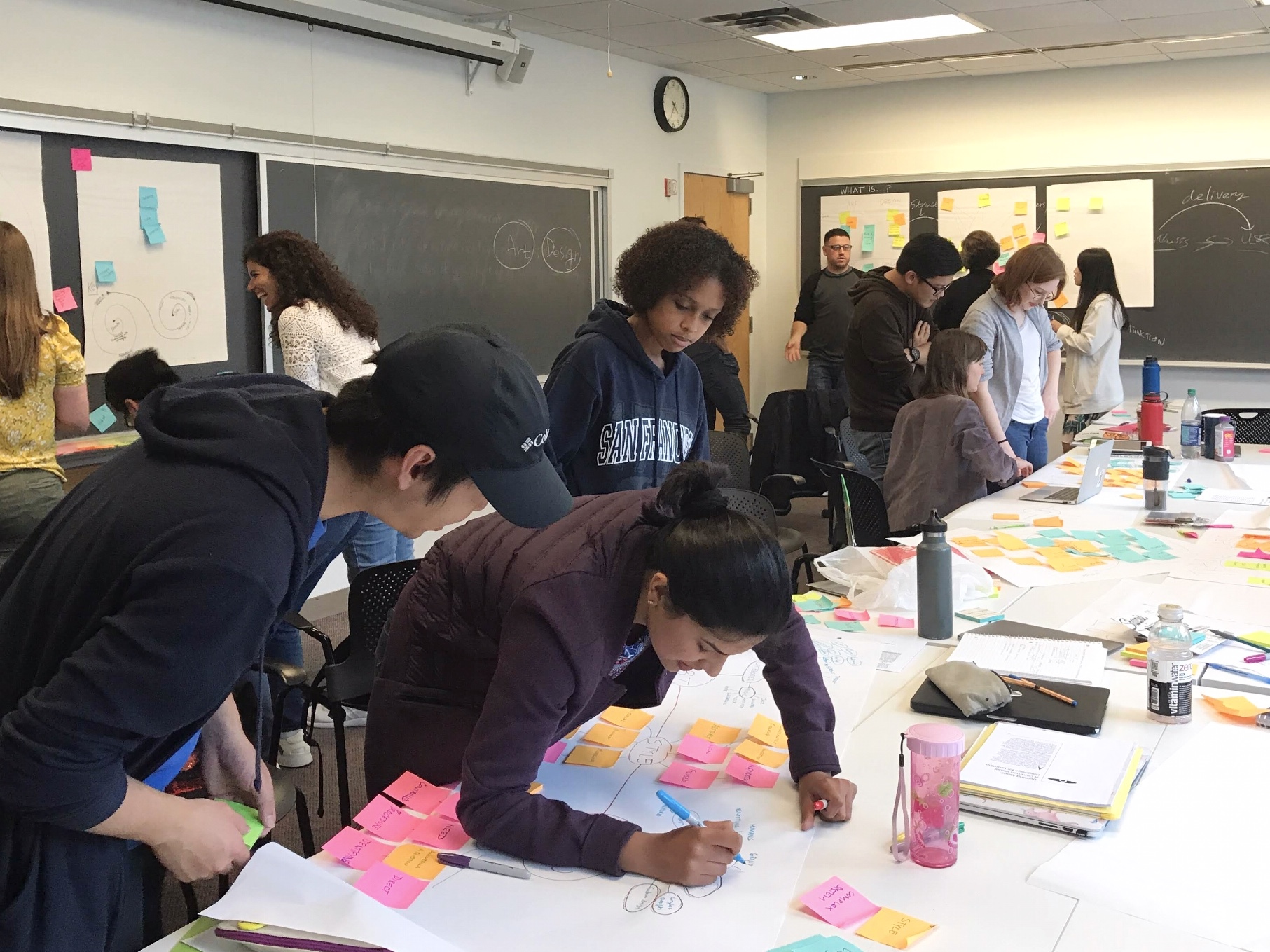
You can specialize your degree by choosing a concentration in experience design, information design and data visualization, or interaction design. Students in all concentrations work together, fostering a cross-disciplinary exchange that is integral to design in a rapidly changing world.
Apply Now
Learning Outcomes
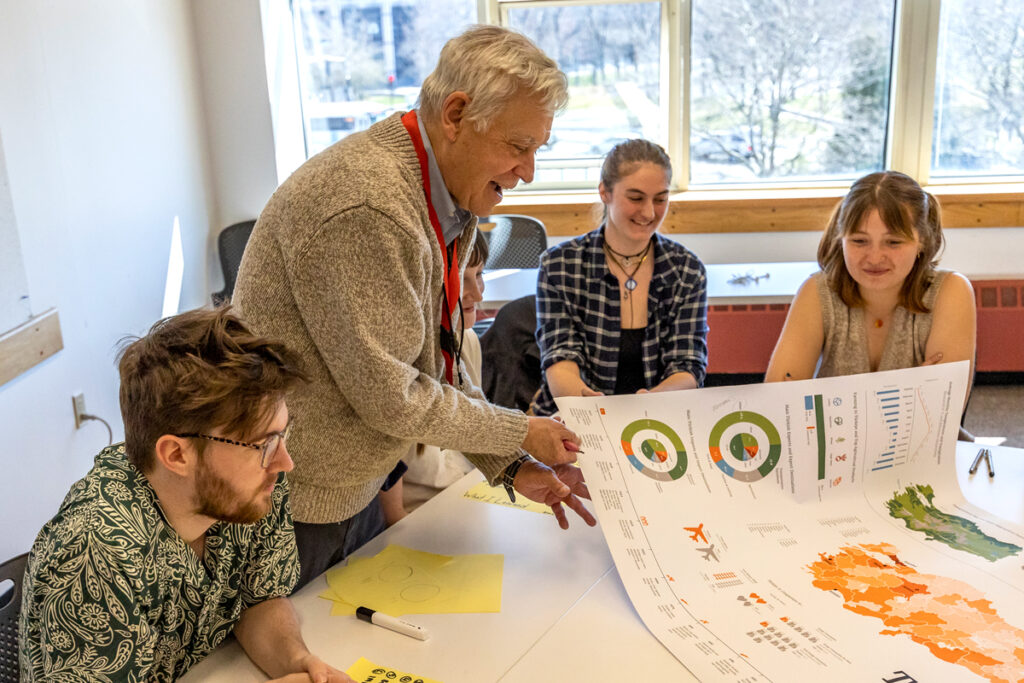
Research: Develop proficiency with qualitative and quantitative research methods, experimentation, and reconnaissance to inform design projects. Collect, analyze, and synthesize diverse forms of data, ranging from lived human experience to large-scale datasets, to uncover insights into human behavior, cognition, and experience.
Interpret: Apply systems thinking, abstraction, and modeling to interpret complex phenomena. Engage in critical analysis of data types, sources, and contexts, incorporating principles of visual cognition and systemic relationships to generate novel strategies and meaningful frameworks for design.
Make: Synthesize design methods and data sensitivity to envision, design, and propose systems, artifacts, interfaces, services, and visual communications. Translate complex issues into coherent experiences and visualizations that reveal patterns, narratives, and opportunities for human understanding and engagement.
Critique: Evaluate the quality, effectiveness, and ethical dimensions of design, technology, and data-driven interventions. Develop critical language and frameworks to assess values, consequences, efficiency, and the broader impact of design projects on human intentions, goals, and social contexts.
Present: Use a diverse range of representational methods, including notational systems, prototypes, visual languages, technological interfaces, and interactive installations, to model and communicate system components, relationships, and design narratives. Create engaging, holistic presentations that integrate human values, cognitive principles, and dynamic aspects of experiences over time.
Degree
Master of Science
Credits
32
Duration
1 Year
Location
Boston
Format
In-person
Type
STEM-designated